The Body Is Not Holding Trauma — It Is Holding Time
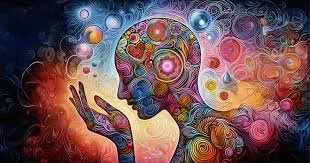
Trauma is often described as something stored in the body, yet it may be better understood as experience that has not fully completed.
We often say the body stores trauma.
It is a compassionate description.
But it is not quite true.
The body does not store the past.
The body lives only here — yet sometimes here has not fully arrived.
What we call trauma is not memory.
It is a moment that never completely became over.
Trauma as an Unfinished Moment
There are experiences the mind cannot entirely receive as they occur.
Not because they are forgotten.
Because they are too immediate to be allowed all at once.
Awareness narrows.
Sensation fragments.
Time pauses without appearing to pause.
Life continues.
The moment does not.
Something remains suspended inside the organism — not as story, but as incomplete experience.
Not remembered.
Not repressed.
Simply not finished.
The body is not reliving the past.
It is waiting for the present to complete itself.
Why Reactions Appear in the Present
Later, something small happens.
A tone changes.
A pause lingers.
Someone turns away half a second too long.
And the body reacts with an intensity that does not belong to the moment.
This is often called triggering.
But the organism is not confusing now with then.
It is recognizing an opening.
A pattern similar enough that the nervous system senses:
time may be able to continue here.
The reaction is not repetition.
It is an attempt at conclusion.
Healing as Completion
We tend to imagine healing as working through stored layers.
Yet nothing is actually stored.
An experience that could not be fully lived does not become past.
It remains present without context.
When awareness gently stays with sensation — without correcting, explaining, or moving away — something subtle happens:
The body stops preparing for interruption.
Sensation begins to move.
Not because it was released.
Because it was finally allowed to occur.
And the organism registers, often without words:
This has now happened.
For the first time, the past becomes past.
Meditation and Continuation
This is why stillness can feel strangely emotional even when nothing is wrong.
Meditation is not concentrating on an object.
It is the first environment where experience is not immediately redirected.
In ordinary living, sensation is translated the instant it appears:
into thought
into action
into distraction.
In stillness, the translation pauses.
And what once could not unfold during the moment of its origin begins to unfold now.
Not memory.
Continuation.
Meditation is not returning to the present moment.
It is allowing the present moment to finish arriving.
When Stillness Allows Completion
When activity stops, interruption stops.
The organism senses an unfamiliar permission —
nothing will override what begins to move.
So unfinished experience approaches completion.
Sometimes gently.
Sometimes as restlessness.
Sometimes as unexpected relief.
The mind assumes meditation created the feeling.
But meditation did not create anything.
It removed interference.
Completion in Stillness
Occasionally a sensation intensifies for no reason and then disappears.
No understanding accompanies it.
No story resolves.
Yet something unmistakably ends.
The mind calls this calm.
The body recognizes it as time continuing.
A quiet sense of wholeness appears not because we created it, but because nothing interrupted what was ready to complete.
Nothing Was Stored
What seemed carried for years was never held in the way we imagined.
It remained because it could not safely move.
When awareness no longer interferes, life resumes its natural continuity.
Tension returns to sensation.
Sensation returns to simple aliveness.
Nothing needed to be released.
Only finished.
The body was never holding the past.
Time was waiting.
Healing occurs when experience finally becomes past.